Pages

Friday, March 29, 2019

The feet can measure height

The feet can measure the height.


THE FEET CAN MEASURE THE HEIGHT


The bones of the feet can tell a lot about a person. What do feet reveal about a person's height? Forensic anthropologists team up with law enforcers to help solve crimes.
Bones of the feet can reveal an interesting fact about an individual. Let's combine math with forensics to see how.
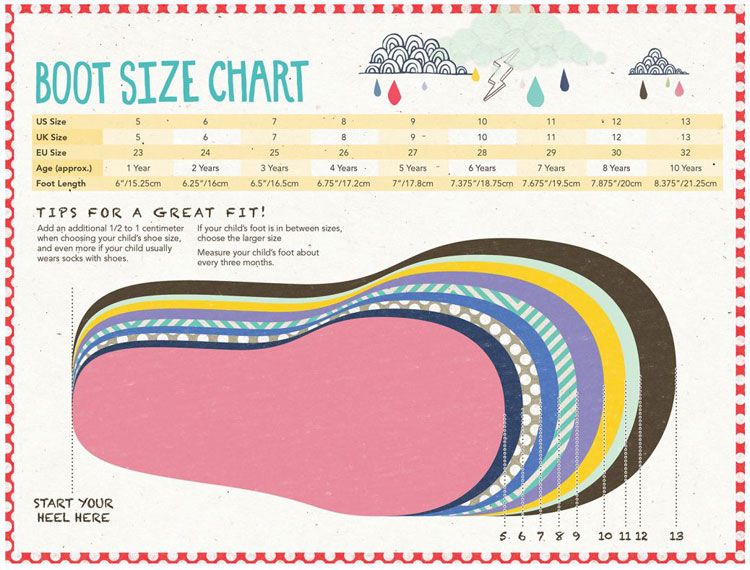
Image result for foot chart sizeImage result for foot to height ratio chart

Aim:  To use forensic science techniques to measure the height of a criminal.

Materials:
  1. Rulers (for height and foot size in cm and metres)
  2. A marker
  3. Chromebook
  4. Whiteboard/something to measure on

Steps:

  1. Measure your height in centimetres with ruler
  2. After you measure feet in centimetres with a ruler as well
  3. Write down what you got in the chart
  4. Divide you foot size with your height then times it by 100 in one equation
  5. Write the answer down

Findings:
Name
Foot  (cm)
Height (cm)
Skyler
20
147.5
Shiela
22
158.5
Lhysette
19
143 cm
Rieya
23
147 cm


Divide the length of each person's foot by his/her height. then multiply it by 100.
Skyler = 13.5
Shiela = 13.8
Lhysette = 13.2
Rieya = 15.6


Tuesday, March 26, 2019

Forensics - Fingerprints


Forensics - Fingerprints

What is the definition of forensic science? Forensics are methods or techniques that are used to solve crimes, it's also to identify suspects and victims.

Name 5 different kinds of activities used in forensic science and find a picture of each

- Finding Fingerprints 
Image result for fingerprints types

- D.N.A
Image result for D.N.A

- Finding Footprints
Image result for footprints


- Ballistics
Image result for ballistics

- White Powder Test
Image result for white powder test

Name 5 jobs that would use forensics to investigate crime 

- Investigator
- Chemist
- Science Technician
- Photographer
- Documents Examiner

Fingerprints

Material:

  1.  Balloon
  2.  Ink Pad
  3.  Thumb and Finger
Steps:

  1.  The first thing you're going to need to do is you need to find a balloon and an ink pad.
  2.  Press your thumb onto the ink pad.
  3.  Before you put your finger on the balloon make sure it's not yet inflated then quickly put your thumb on the balloon.
  4.  Let it dry before inflating it.
  5.  While the ink is drying, you can wash your hands if you want.
  6.  After it dried, inflate the balloon, just a little bit, not too much, you'll see that the fingerprints will slowly expand. 
  7.  Do the same step with your other fingers if you want, on the other side of the balloon but make sure that the other side is completely dry.


Record the types of fingerprints from those in your group.
Name
Fingerprint 1 ( Thumb)
Fingerprint 2 (finger)
SkylerLoopIndex finger: Loop
RieyaLoopRing finger: Whorl
LhysetteLoopIndex finger: Loop


Hidden fingerprints

Aim: To learn how to lift hidden fingerprints from an object.

1. Lifting and Gathering fingerprints.

Equipment:
  1.  Brush  
  2.  White Powder
  3.  Magnifying Glass
  4.  Tape
  5.  Transparent Plastic Files
Method; 

1. Get a white power, brush, tape, transparent plastic files and a magnifying glass.
2. First, dip your thumb (you could also dip the brush onto the powder then brush your finger) or any finger you want on the power, remove the excess.
3. Then gently press your finger onto the plastic file.
4. Stick the tap on where your fingerprint is, you will see that the fingerprint will stick to the tape.
5. You can use the magnifying glass to look closer to the fingerprint.


Tuesday, February 19, 2019

Dirty Water Experiment - Filtration

Dirty Water Experiment

Aim: To make a filtration plant using household materials


What is filtration?

Filtration is separating solids from liquids by adding a medium through
which only the liquid can pass.
Examples are:
  1.  Brewing a coffee
  2.  Kidney
  3.  Separating dirty from water (Dirty water and a cloth)
  4. H.E.P.A (High-Efficiency Particulate Air) Filter (Air conditioner) and vacuum

Materials
  1. Paper Filter
  1. Sand
  1. Pebbles/stone
  1. Bottle
  1. Scissors
  1. Cup
  1. Dirty Water


Process - ( use verbs or doing words in each step )

Step 1
Cut the bottle into half to create a funnel and a container shape
Step 2
Put the top half upside down to join them together
STEP 3
Add layers of filter paper then sand then pebbles.
For the filter paper, it will look like a thick-circle shaped piece of paper,
you’re going to need to fold it in quarters and open one slit
STEP 4
Get a cup of dirty water, any liquid you want, your choice but we used
dirty water with ground coffee in it, to experiment with
STEP 5
Pour dirty water into the funnel carefully so it won’t spill
STEP 6
Observe how the water flows now the water has to be not flowing and
if it’s clear (well you don’t really expect it to be clear as actual water so don’t get your expectation high)
then you’re all good to go and you did a great job but if it’s still dirty, maybe you should fix it and try
again


Measurements

Write a short sentence about the water every 1 minute.
Include 'How much water has filtered through', 'How fast it is dripping through', and
'How clear the water is'.

We got the water to drip! It’s not clear though however there wasn’t any dirt to it.
The experiment turned out well I wouldn’t say it was our best work.

I was the one who cut the bottle into half, Rieya did the folding of the filter paper,
Lhysette was in charge of getting the sand, Rieya was in charge of getting the pebbles,
Lhysette was  also in charge of getting the dirty water
As I said you don’t really expect it to be clear as actual water so don’t get your expectation high.  

What I feel:
My group and I are pretty happy with our work but it could’ve been much better if the water was
a little bit clear.

My next steps:
My next step is, placing the layers properly because the water wasn’t clear enough but it’s clean

Group members: Me, Lhysette, Rieya and Shiela


Thursday, February 14, 2019

Stop Motion - Angel and Devil

A week ago, we started a module about art and we're doing stop motion, Rieya, Megan and I are in a group and we were asked to brainstorm ideas, I was thinking of an Angel and a Devil story, the three of us decided to do my idea. 

Questions

1. What is your end outcome? I think it will be successful as long as we do what we need to do properly, as long as we work hard and push our limit and as long as we work as a group. 

2. What is a stop motion? Stop motion is where you stop and start your camera repeatedly, stopping the camera to move an object and clicking the camera when you want to take a photo of the object. 

3. What have you done so far to get there? My group and I started to make the storyboard and script.

4. What do you still need to do? I need to finish the storyboard and script.

5. Brief the outline of the story - it's about an angel who was given a blessing by Aphrodite, the goddess of love, but the angel (Angelica's mom) didn't know about it, when the egg hatched, the baby rolls off the clouds and falls into a volcano where an abandoned egg was, it was a devil egg. But then  Angelica's mom took her away. How we did the story: we used our imagination to make it. 

Our Medium: 
Clay, Whiteboard or a toy
My group and I decided to make it in a whiteboard so it'd be easier for us to work on it.
My group members: Rieya, Megan and Skyler (which is me) 
Photo of my script and my storyboard:  

This is the storyboard (I was the one who drew it and I also helped my friend colour it)


This is the script


Friday, February 8, 2019

Waitangi Day

On Tuesday, we started to get to know Waitangi Day, some people don't celebrate it, probably because they don't know Waitangi Day or they haven't been in New Zealand for so long or They don't really know much about New Zealand's holiday and its history or they don't celebrate it because they don't want to. 

What happened when people celebrate Waitangi Day? Well, I don't really know much about that because people have different opinions about Waitangi Day and the way they celebrate it. But based on what I read on an article that I chose about Waitangi Day is that Waitangi Day celebrations haven't been that peaceful, because of people, they protest and conflict about the Treaty of Waitangi, the article didn't say why they conflict but it was like an explanation why people protests although it's not enough. It says that it's because of the complex nature of the original treaty discussions that the New Zealand Wars followed, and the way people view the relevance of the treaty for the New Zealand Today. 

Why did Waitangi Day happen?  Waitangi Day celebrations happen because it reflects a significant day in New Zealand history. 

When does Waitangi Day happen? It happens or celebrated on the 6th of February.

How it happened? It happened when the British people and Maori's come together.

Where it happened? in, of course, New Zealand but some people go to churched, whares or to Waitangi to celebrate or they go to a restaurant but most people celebrate it at home.

I've worked on answering the questions that are related to Waitangi Day and remembering, understanding, applying and analyzing. 

I've learnt so much about Waitangi Day, how it all came together like how, when where, what, why Waitangi Day is celebrated until today, and its history.

What do I feel about this? I feel really great because I've learnt so much about Waitangi Day and I got to know more about the New Zealand history.


Tuesday, January 1, 2019

SLJ Week 3 Day 2

Activity 1
One of the most important, but least talked about, animals in New Zealand is the bumblebee. It was first introduced to New Zealand in 1885 to help pollinate a special plant called the ‘Red Clover.’ Today, bumblebees do many other important jobs, including the pollination of greenhouses and orchard crops. If the bees did not pollinate the plants, they would not survive.
For this activity, we would like you to bee-come detectives and to learn more about the mysterious, and often ignored, bumblebee. We will provide you with five sentences about bumblebees from the NZ Bumblebee Conservation Trust website and it is your job to fill in the blanks with the missing information about bees. Choose the phrase/word that makes the most sense from the list at the bottom. (Each phrase/word can only be used once).
To earn full points for this activity you must type all five sentences and then fill in the blanks for each one. Post the completed sentences on your blog.
Unbee-lievable Facts about Bumblebees
  • The word ‘bumblebee’ is a compound word (bumble + bee). The word ‘bumble’ means to __hum or buzz_or drone__.
  • Bumblebees can fly very quickly. They can reach ground speeds of _54_ kilometres per hour (km/h).
  • Bumblebees are very strong! They carry up to __90__ percent of their body weight in food with them to avoid starvation.
  • Bumblebees can do more work and carry more pollen than other bees, including honeybees. In fact, they can do up to   __50____ times as much work as a normal honeybee.
  • The number of bumblebees is declining in New Zealand due to a number of factors, including the  ___removal of wildflowers and flowering trees, habitat loss, and extensive use of pesticides_.

Activity 2

Every day a chemical compound called carbon dioxide (CO2) is produced and released into the air.  If it isn’t removed, it can become toxic for humans. Fortunately, there are a number of places where CO2 is absorbed (removed from the air). Two of the most common places are forests and oceans. They are called ‘carbon sinks’ because, like a sink, they gather, clean and drain things away that we don’t want. One of the largest carbon sinks in New Zealand is a forest in the south-western part of the South Island. It drains away 60% of our unwanted carbon!
Let’s imagine that you could design a sink that could gather up and then drain away any foods that you don’t like. On your blog, tell us what you would put in your special sink. If it was me, I would put rice pudding, brussel sprouts, custard, parsnips, and seafood chowder in the sink. Yuck! What about you?
On your blog, list all of the foods that you would put in your special draining sink..
Every day a chemical compound called carbon dioxide (CO2) is produced and released into the air.  If it isn’t removed, it can become toxic for humans. Fortunately, there are a number of places where CO2 is absorbed (removed from the air). Two of the most common places are forests and oceans. They are called ‘carbon sinks’ because, like a sink, they gather, clean and drain things away that we don’t want. One of the largest carbon sinks in New Zealand is a forest in the south-western part of the South Island. It drains away 60% of our unwanted carbon!
Let’s imagine that you could design a sink that could gather up and then drain away any foods that you don’t like. On your blog, tell us what you would put in your special sink. If it was me, I would put rice pudding, brussel sprouts, custard, parsnips, and seafood chowder in the sink. Yuck! What about you?
On your blog, list all of the foods that you would put in your special draining sink..
Onion
Cheddar Cheese (even though sometimes they use it for pizza, I love pizza though but not cheddar cheese)
Dried apricot
Oyster

Activity 3

In the middle of winter it can get quite wet and damp in New Zealand, can’t it? When it gets really damp, it is common for things like mould and fungi to start to grow. We can often see them on the walls, ceilings or floors of our houses or outside on footpaths, buildings or roadways. Some types of mould and fungi are so small that they can’t be seen. Some of these tiny fungi/mould can be found in the air. They are called ‘airborne fungi’ and they can be unhealthy for us.
Let’s imagine that we tested the air in your classroom and found 7 different kinds of mould. Eek! The cleaner says that it takes 5 days for each mould to be eradicated (removed). If the school had to remove each mould one at a time, how long would it take to remove all the mould from the classroom?

On your blog, tell us how you would solve this tricky maths problem. Be sure to also post your final answer in days or weeks.
The cleaner said that it would take us 5 days to for each mould (7) to be removed
You can easily do this with multiplication.

7 x 5 = 35

if you don't know your times table you can do this instead.

5 + 5 + 5 + 5 + 5 + 5 + 5 = 35
or
7 + 7 + 7 + 7 + 7 = 35

Thanks for reading my blogpost :)